Van Gogh's Sunflowers
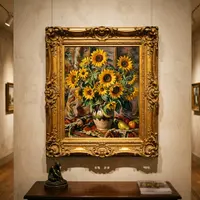
This is the painting most visitors come specifically to see. You can find it in Room 43, and our dedicated guide to Van Gogh's Sunflowers at the National Gallery has everything you need to know. Van Gogh painted several versions of his sunflower compositions, and the National Gallery's version, completed in 1888, is one of the most recognised. It hangs in Room 43, and you will usually find a small crowd gathered around it. The intense yellows and thick, textured brushstrokes make it unmistakable even from across the room.
Turner's The Fighting Temeraire
J.M.W. Turner's painting of the old warship being towed to the breaker's yard was voted Britain's greatest painting in a 2005 BBC poll. The contrast between the ghostly white sailing ship and the squat, dark tugboat pulling it creates a powerful image of the old world giving way to the new. Turner considered it one of his finest works and refused to sell it during his lifetime.
Constable's The Hay Wain
John Constable's 1821 landscape showing a horse-drawn cart crossing a shallow river in Suffolk is one of the most famous images of the English countryside. The painting caused a sensation when it was exhibited in Paris in 1824, influencing the French Romantic painters and later the Impressionists. It remains a defining image of rural England.
Velazquez's The Rokeby Venus
This is the only surviving female nude by Diego Velazquez and one of the most celebrated paintings in the collection. It shows Venus reclining with her back to the viewer, gazing at her reflection in a mirror held by Cupid. The painting became internationally notorious in 1914 when suffragette Mary Richardson attacked it with a meat cleaver in protest at the arrest of Emmeline Pankhurst. The slashes were repaired, though faint traces remain.
Leonardo da Vinci's The Virgin of the Rocks
Leonardo's mysterious painting of the Virgin Mary, the infant Christ, an angel and the young John the Baptist in a rocky grotto is one of two versions he painted. The National Gallery holds the later version, completed around 1506. The soft lighting, intricate geological detail and enigmatic expressions make it one of the most studied Renaissance paintings in existence.
Other Highlights Worth Seeking Out
The gallery holds far more masterpieces than any single visit can cover. Jan van Eyck's Arnolfini Portrait, with its famous convex mirror, is one of the most analysed paintings in art history. Botticelli's Venus and Mars shows the goddess of love triumphant over the god of war. Hans Holbein's The Ambassadors contains one of the most famous examples of anamorphic perspective, a distorted skull that only resolves when viewed from a sharp angle.
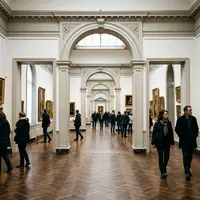
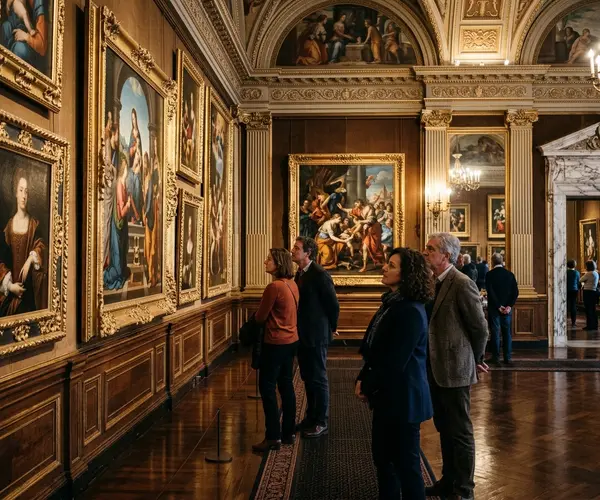
Rembrandt's self-portraits, Caravaggio's dramatic Supper at Emmaus, Monet's Thames paintings and Canaletto's views of Venice all reward attention. With over 2,300 paintings across 66 galleries, the collection is deep enough to sustain years of repeat visits.