The Sharks of Sea Life London
Sharks are among the most popular attractions at Sea Life London Aquarium, and the aquarium has invested heavily in creating habitats that showcase these animals effectively. Several species are represented in the collection, each occupying tanks designed to suit their specific behavioural and environmental needs.
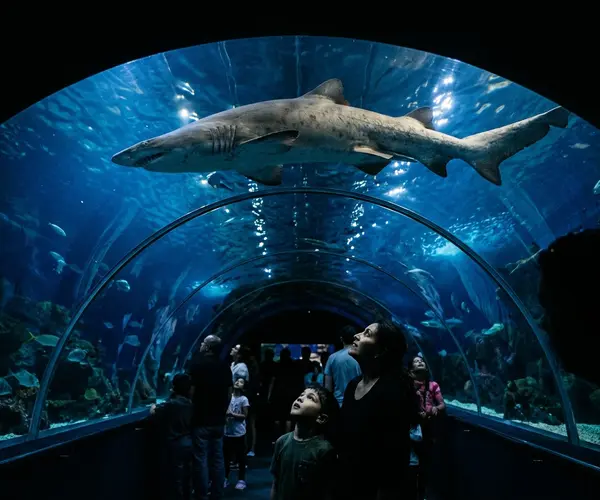
The most visually impressive are the sand tiger sharks. These large, powerful fish can grow to over three metres in length and have a distinctive appearance with rows of protruding, pointed teeth visible even when their mouths are closed. Despite their fierce look, sand tiger sharks are relatively docile and tend to cruise slowly through the water, making them excellent display animals.
Blacktip reef sharks are another key species. Smaller and more agile than the sand tigers, they are recognisable by the dark tips on their fins. These sharks are more active swimmers and can often be seen patrolling the edges of their tank in constant, steady motion.
The Bowmouth Guitarfish
One of the more unusual shark relatives at Sea Life London is the bowmouth guitarfish. This species sits somewhere between a shark and a ray in terms of body shape, with a broad, flattened head and a shark-like tail. Bowmouth guitarfish are increasingly rare in the wild, and seeing one in an aquarium is a notable experience.
The bowmouth guitarfish tends to spend time near the bottom of its tank, moving slowly across the substrate. Its unusual appearance often draws questions from visitors, and the aquarium's information boards explain its place in the broader family of cartilaginous fish that includes sharks, rays and skates.
The Shark Walk
The centrepiece of the shark experience at Sea Life London is the Shark Walk, a glass-floored walkway that passes directly over the main shark tank. Looking down through the glass, you can see the sharks swimming beneath your feet, which creates a perspective that is quite different from viewing them through a conventional side-on window.
The tunnel section of the Shark Walk takes you below the water line, surrounding you with the tank on three sides. Sharks, rays and other large fish pass overhead and alongside, giving the impression of being inside the habitat rather than looking in from outside. The tunnel is one of the most photographed spots in the entire aquarium.
The combination of the overhead glass walkway and the underwater tunnel means you see the sharks from multiple angles during your visit. From above, you appreciate their size and the way they move through the water. From the tunnel, you experience the scale of the tank and the proximity of the animals in a way that feels immersive.
Understanding Sharks
Sea Life London uses its shark collection as a platform for conservation education. Information boards around the shark exhibits explain the threats facing shark populations worldwide, including overfishing, habitat loss and the shark fin trade. The aquarium participates in breeding programmes and research initiatives aimed at supporting shark conservation.
Daily feeding talks provide additional context about the individual sharks in the collection. Aquarists explain the dietary needs of different species, demonstrate feeding techniques and answer questions from the audience. These talks are included in the standard admission and run at scheduled times throughout the day.
Shark Behaviour
Watching shark behaviour over the course of a visit reveals patterns that are not immediately obvious. Sand tiger sharks tend to swim slowly in wide circuits, occasionally changing direction or depth. Blacktip reef sharks are more reactive, sometimes accelerating briefly before settling back into their patrol pattern.
Feeding time produces the most dramatic behaviour. The sharks become noticeably more alert, and their swimming patterns shift from leisurely cruising to focused, purposeful movement. The aquarists time feeds carefully to ensure all sharks receive adequate food while minimising competition.
Best Times to See the Sharks
The sharks are visible throughout opening hours, but certain times offer better viewing. Early in the day, the tanks are often calmer with fewer visitors blocking the glass, making it easier to watch the sharks without interruption. Planning your timing around the shark exhibit is one reason knowing how long the aquarium takes helps you get the most from your visit. Scheduled feeding times draw the sharks to specific areas of the tank, making them more visible and active.
The Shark Walk itself can become crowded during peak periods, particularly on weekends and school holidays. Visiting on a weekday or arriving early gives you more time to stand on the glass walkway and in the tunnel without feeling rushed by other visitors passing through.